Hot Rod Mayhem

Role: Game Designer / Level Designer (Casual Brothers)
Engine & Tools: Unity, Level Design & Editing Internal Tools
Overview
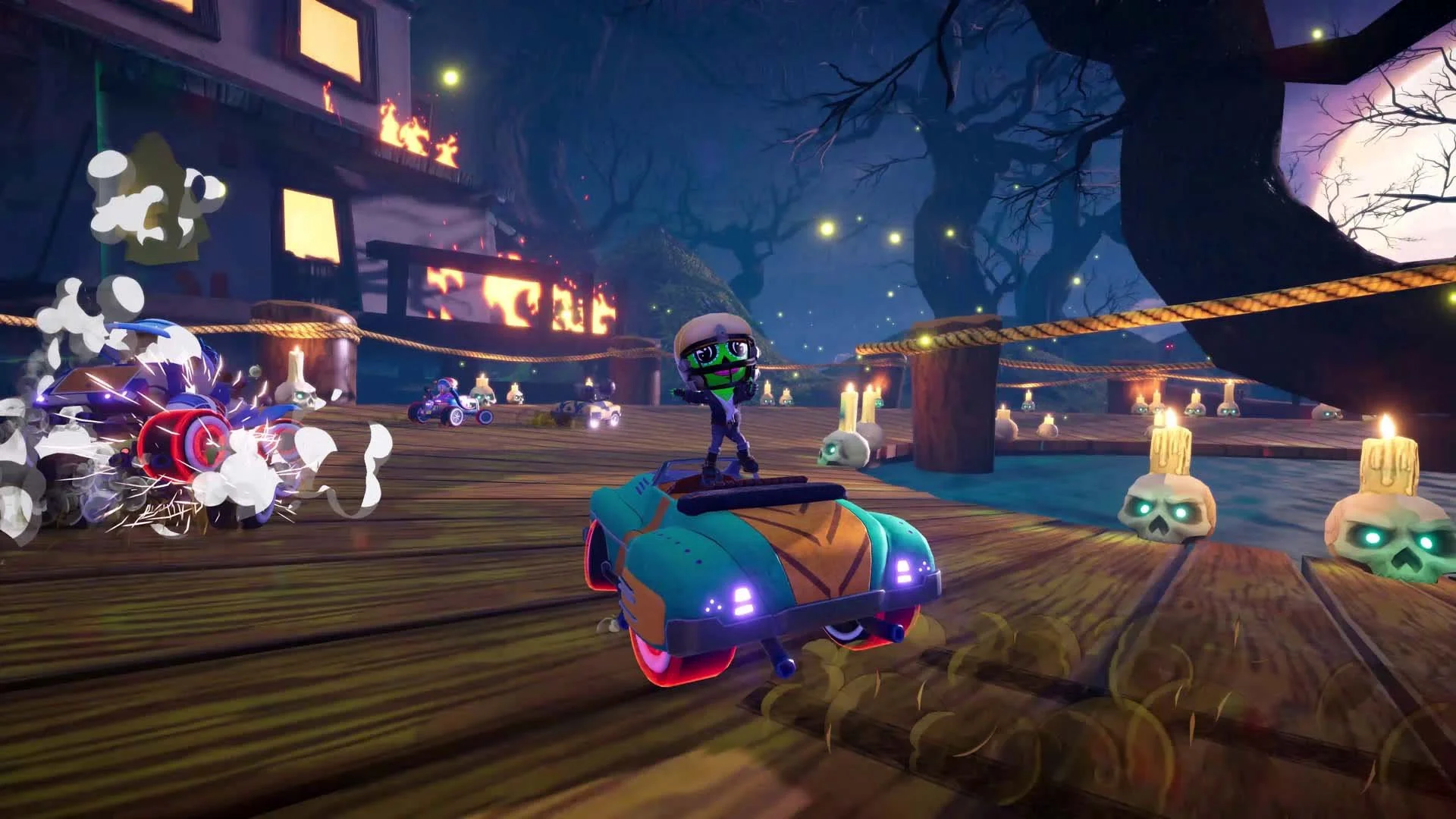
Designed, implemented, and balanced 100 bespoke challenge trials across 10 unique racing tracks for Hotrod Mayhem. Focused on building high-replayability single-player content through modular obstacle placement, structured difficulty scaling, iterative playtesting, and technical design documentation.
Key Technical & Design Contributions
Content & Level Design
100 Challenge Trials: Authored 10 distinct challenge modes applied across 10 maps, expanding single-player content depth without requiring additional art assets.
Hazard & Objective Placement: Positioned obstacles, dynamic hazards, and trigger volumes to turn standard maps into skill tests.
Balancing & Playtesting
Difficulty Tuning: Balanced target completion times, score thresholds, and pass/fail conditions to maintain a smooth difficulty curve across all 100 trials.
Iterative Playtesting: Conducted rigorous playtesting passes to evaluate vehicle physics interactions, remove frustrating difficulty spikes, and ensure hazard telegraphing remained readable.
Bugfixing
Bug Fixing & QA: Tracked, debugged, and resolved level geometry gaps, trigger volume failures, and edge-case physics bugs across all maps prior to launch.
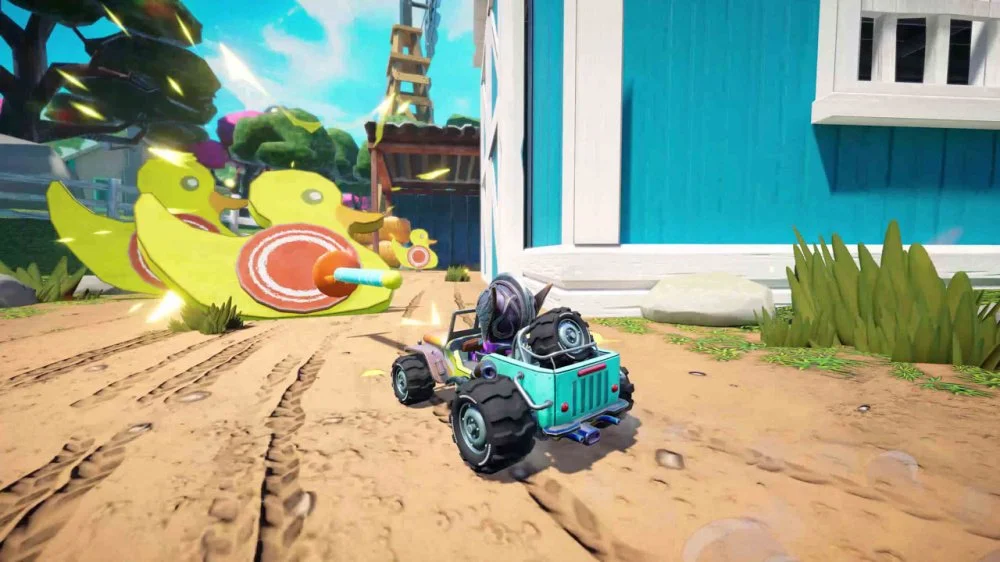
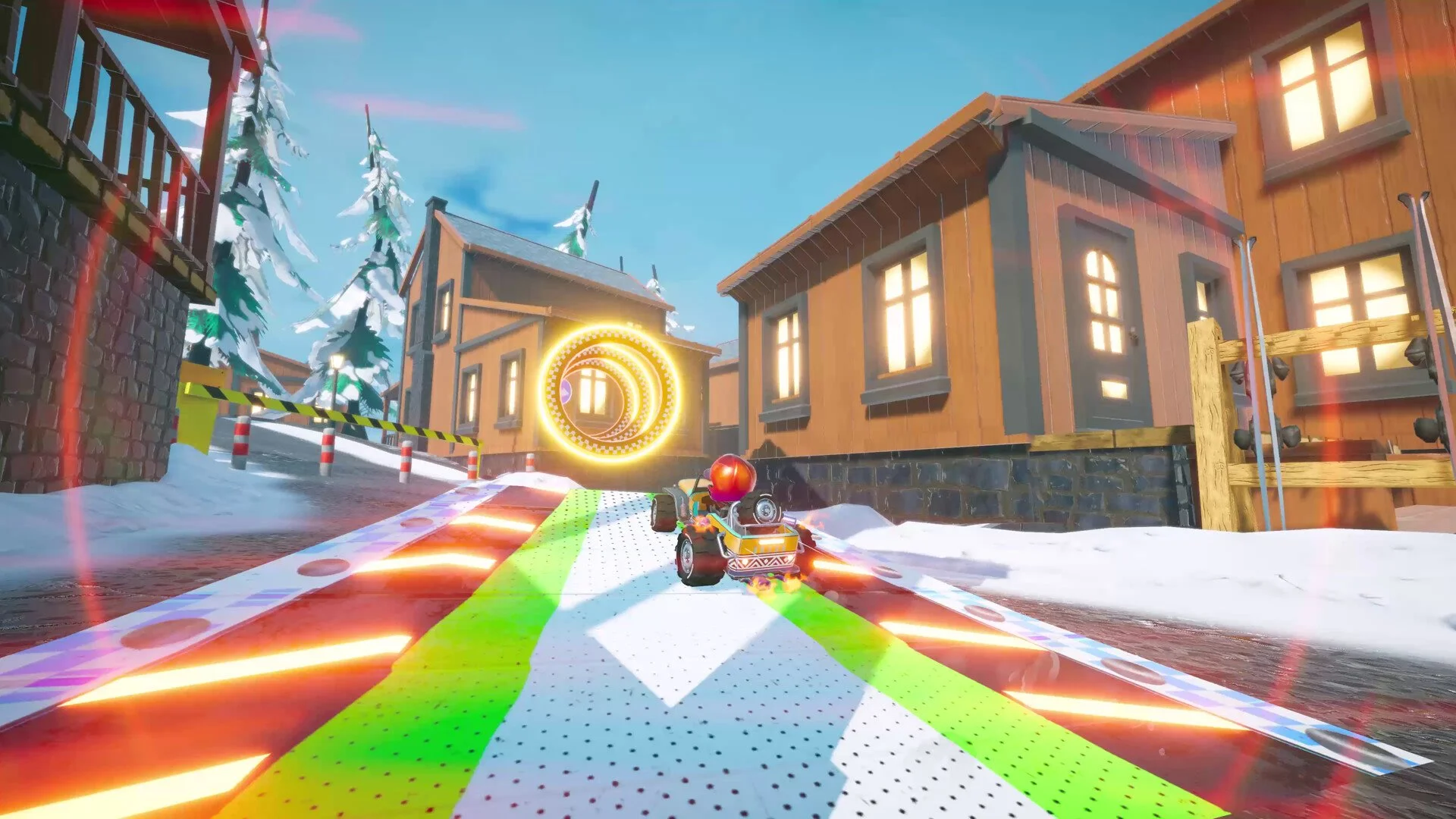
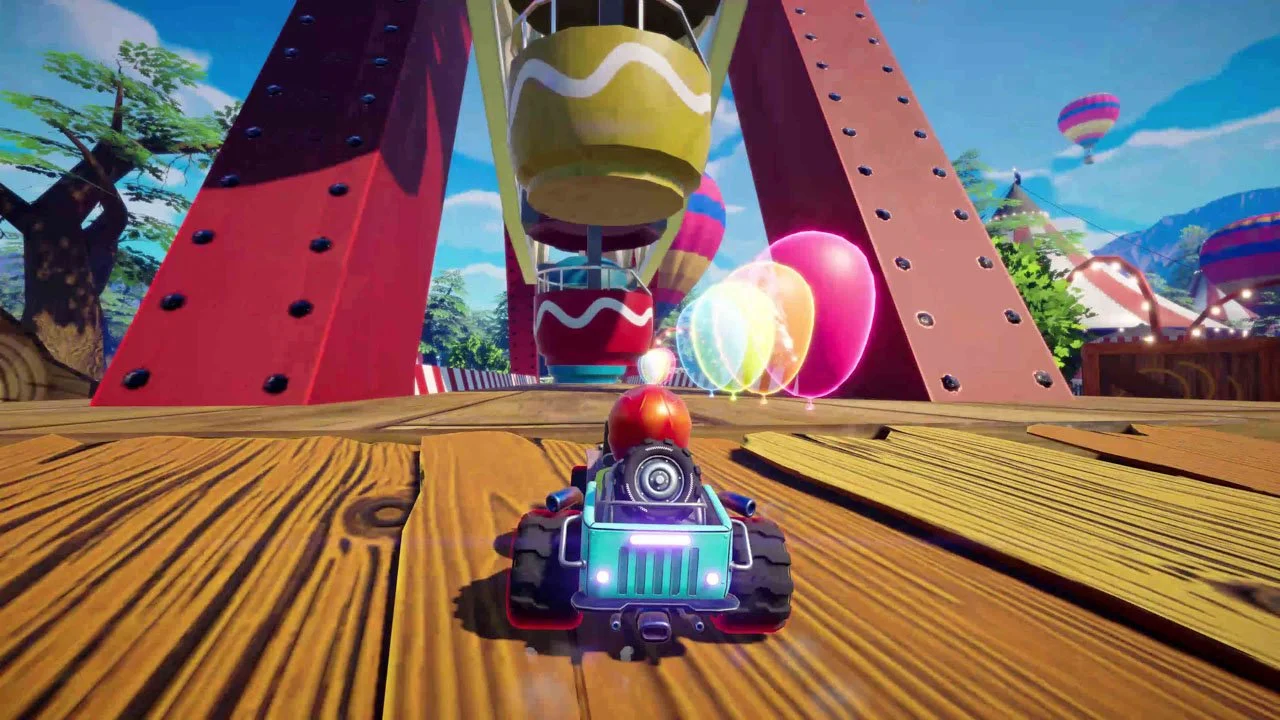
As a game designer, I focused on the Trials Mode, designing and implementing 100 unique trial challenges across 10 maps and 10 trial types including Barrel Dodge, Checkpoint Chase, Shock Shuffle, Balloon Pop, Cone Careen, Booster Rush, Hoop Jump, Target Attack, Puppy Panic, and Alien Attack. Each trial supported four difficulty tiers (Easy, Medium, Hard, and Crazy), with increasing challenge reflected through tighter time limits, more obstacles, or faster targets. While some variants had already been created for a small number of maps, I expanded them across all remaining maps, designing new layouts, integrating them into existing environments, balancing difficulty, and playtesting extensively to ensure fairness and fun. I also addressed minor bugs and design edge cases throughout implementation, ensuring consistency and replayability across the full range of trials.
Trial Creation Workflow
Track Analysis & Spatial Planning
Track Evaluation: Evaluated all 10 track layouts to identify optimal locations for hazards, checkpoints, and objective triggers.
Layout Mapping: Mapped placement zones across elevation changes, sharp turns, and sightlines to ensure each trial felt naturally integrated into the track layout.
Prefab Placement & Logic Setup
Hybrid Placement Workflow: Combined hand-placement for slalom gates, collectibles, and boost pads with spline tools for rapid object distribution (e.g., instantiating electric orb arrays along track curves), followed by manual transform adjustments for precise spacing and gameplay balance.
Target Balancing & Difficulty Tuning
Metric Baselines: Ran test passes across all 100 trials to record baseline times and hazard interactions.
Progression Curves: Adjusted objective parameters, score thresholds, time limits, and obstacle density so each trial offered a clear, scalable difficulty curve.
Physics Playtesting & Edge-Case QA
Exploit Prevention: Stress-tested vehicle physics against track geometry to prevent wall-riding, shortcut bypasses, or trigger sequence breaks.
Readability Polish: Fine-tuned obstacle spacing and visual telegraphing so hazards remained readable and fair at high vehicle speeds.